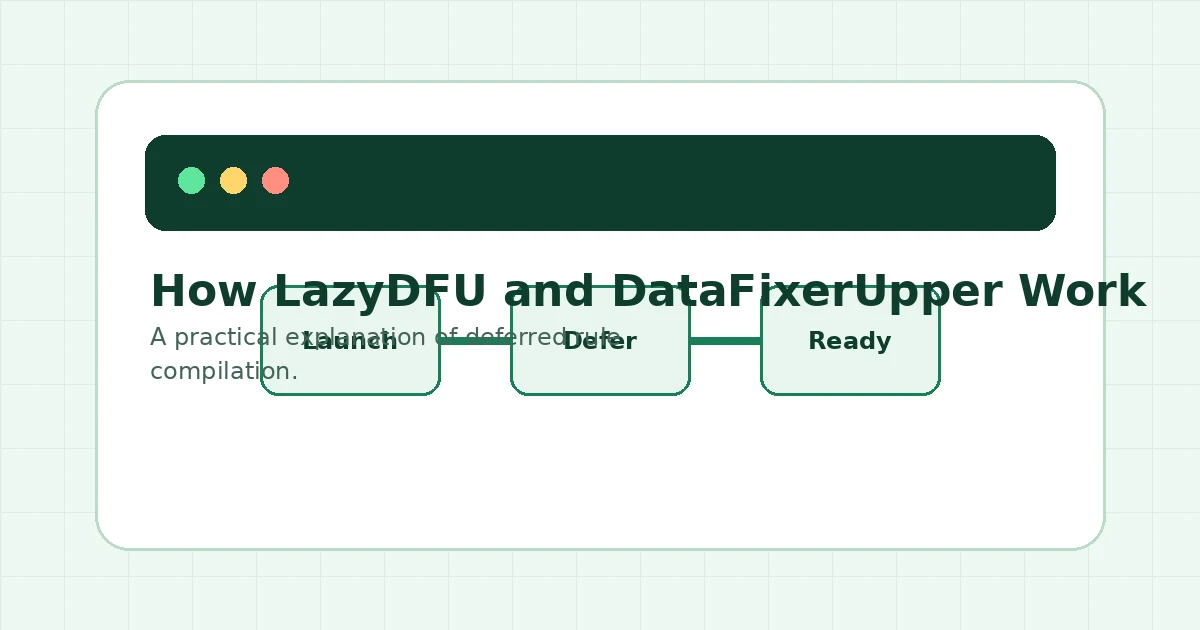
DataFixerUpper (DFU) is part of Minecraft’s data migration system. When game data created by older versions must be understood by newer code, DFU rules describe the transformations. LazyDFU’s idea is to avoid preparing every migration rule during initial startup when most of them may never be needed.
What DFU is for
Minecraft evolves its saved-data formats. DFU provides structured migration rules so older data can move through version changes. That makes it important even though many normal launches do not need to convert old content.
Why eager preparation can be expensive
Building a large graph of migration rules consumes CPU and memory. On versions where this work happens early, the user can spend substantial time waiting before the game is fully responsive.
What LazyDFU defers
LazyDFU lets DFU exist but avoids immediately caching the expensive rules. If no conversion needs them, startup skips that work. If conversion later needs them, the rules can be created at that time.
The trade-off in one sentence
LazyDFU moves work from “always during startup” to “only later if needed.” That is why faster launch can coexist with a temporary later pause during a real migration event.
Related next step
Use the compatibility information above before choosing a download. If you only have the supplied master.zip, remember that it is source code rather than a normal mods-folder JAR.